Category
Sport
Tour de France 2026 to open with a team time trial in Barcelona
 Tour de France 2026 to open with a team time trial in Barcelona
World Cup 2030 expected to generate €400 million for Portugal
 World Cup 2030 expected to generate €400 million for Portugal
Football: 4,000 police officers and gendarmes deployed for the France-Israel match
 Football: 4,000 police officers and gendarmes deployed for the France-Israel match
1.2 million tickets remain for Paris Olympics despite record sales
 1.2 million tickets remain for Paris Olympics despite record sales
Diplomatic tensions rise as Germany summons Turkish ambassador over controversial Euro 2024 gesture
 Diplomatic tensions rise as Germany summons Turkish ambassador over controversial Euro 2024 gesture
Paris police chief highlights islamist terrorism as key security concern for upcoming Olympics
Paris police chief highlights islamist terrorism as key security concern for upcoming Olympics
Belgium to deploy troops to Paris for Olympic security boost
Belgium to deploy troops to Paris for Olympic security boost
Unprecedented surge in aggression reports during Flemish youth football season
 Unprecedented surge in aggression reports during Flemish youth football season
Paris 2024 Olympics: over 1,600 housing units to become student accommodation post-Games
Paris 2024 Olympics: over 1,600 housing units to become student accommodation post-Games
Flanders aims to regulate foreign takeovers in amateur soccer
 Flanders aims to regulate foreign takeovers in amateur soccer
Technology
-
 Belgium climbs to second place in EU recycling rankings
Belgium has emerged as one of Europe’s leading recyclers, ranking second in the European Union for its use of recycled materials in 2024, according to new Eurostat figures released onRead More...
Belgium climbs to second place in EU recycling rankings
Belgium has emerged as one of Europe’s leading recyclers, ranking second in the European Union for its use of recycled materials in 2024, according to new Eurostat figures released onRead More... -
 HoloSolis secures $255 million to build major solar panel factories in France
French solar manufacturer HoloSolis has raised more than €220 million ($255 million) to launch construction on what is set to become one of Europe’s largestRead More...
HoloSolis secures $255 million to build major solar panel factories in France
French solar manufacturer HoloSolis has raised more than €220 million ($255 million) to launch construction on what is set to become one of Europe’s largestRead More... -
 Germany signs €1 billion deal for 20 additional Airbus military helicopters
Germany is set to invest nearly €1 billion ($1.2 billion) in 20 more H145M military helicopters from Airbus, with deliveries scheduled across 2027 and 2028, according to a finance ministryRead More...
Germany signs €1 billion deal for 20 additional Airbus military helicopters
Germany is set to invest nearly €1 billion ($1.2 billion) in 20 more H145M military helicopters from Airbus, with deliveries scheduled across 2027 and 2028, according to a finance ministryRead More... -
 Denmark wants to allow airports to shoot down drones
Denmark is considering new legislation that would allow airports, seaports, and other critical infrastructure to take more aggressive action against unauthorized drones. Under the proposed law,Read More...
Denmark wants to allow airports to shoot down drones
Denmark is considering new legislation that would allow airports, seaports, and other critical infrastructure to take more aggressive action against unauthorized drones. Under the proposed law,Read More... -
 Chinese platform Temu plans to enter Swiss food market
Chinese e-commerce platform Temu is preparing to expand into the Swiss grocery sector, according to a report by Tages-Anzeiger. After launching food sales in Germany, Temu is now settingRead More...
Chinese platform Temu plans to enter Swiss food market
Chinese e-commerce platform Temu is preparing to expand into the Swiss grocery sector, according to a report by Tages-Anzeiger. After launching food sales in Germany, Temu is now settingRead More... -
 Germany’s energy subsidy plans poised for EU approval as Brussels updates state aid rules
The European Commission is set to greenlight national subsidies for energy-intensive industries as it unveils major changes to EU state aid rules — a move that will legitimize Germany’sRead More...
Germany’s energy subsidy plans poised for EU approval as Brussels updates state aid rules
The European Commission is set to greenlight national subsidies for energy-intensive industries as it unveils major changes to EU state aid rules — a move that will legitimize Germany’sRead More... -
 Macron urges Europe to reclaim status as leading space power
President Emmanuel Macron declared on Friday that Europe must reestablish itself as a major space power, warning that France risks losing its position in the fast-growing low Earth orbit (LEO)Read More...
Macron urges Europe to reclaim status as leading space power
President Emmanuel Macron declared on Friday that Europe must reestablish itself as a major space power, warning that France risks losing its position in the fast-growing low Earth orbit (LEO)Read More... -
 France chooses Saab’s GlobalEye to replace aging E-3F Sentry fleet
France has officially selected Saab’s GlobalEye Airborne Early Warning and Control (AEW&C) aircraft to replace its retiring fleet of Boeing E-3F Sentry planes. The announcement was made atRead More...
France chooses Saab’s GlobalEye to replace aging E-3F Sentry fleet
France has officially selected Saab’s GlobalEye Airborne Early Warning and Control (AEW&C) aircraft to replace its retiring fleet of Boeing E-3F Sentry planes. The announcement was made atRead More... -
 Finland to shift passport production to Poland, cutting 160 jobs
Finland is set to relocate the production of its passports from domestic facilities to Poland, a move expected to eliminate 160 jobs, according to Finnish media.Read More...
Finland to shift passport production to Poland, cutting 160 jobs
Finland is set to relocate the production of its passports from domestic facilities to Poland, a move expected to eliminate 160 jobs, according to Finnish media.Read More...

Our poll
Entertainment
-
 DiscoverEU marks 40 years of Schengen with 40,000 free travel passes for young Europeans
The European Commission is celebrating the 40th anniversary of the Schengen Area by offering 40,000 young Europeans the chance to explore the continent through DiscoverEU, part of the31 October 2025Read More...
DiscoverEU marks 40 years of Schengen with 40,000 free travel passes for young Europeans
The European Commission is celebrating the 40th anniversary of the Schengen Area by offering 40,000 young Europeans the chance to explore the continent through DiscoverEU, part of the31 October 2025Read More... -
 Brussels universities to award honorary doctorates to Stromae, Lize Spit, and Amélie Nothomb
The Vrije Universiteit Brussel (VUB) announced on Monday that Stromae, Lize Spit, Amélie Nothomb, François Schuiten, and Ever Meulen will receive joint honorary doctorates from VUB and27 October 2025Read More...
Brussels universities to award honorary doctorates to Stromae, Lize Spit, and Amélie Nothomb
The Vrije Universiteit Brussel (VUB) announced on Monday that Stromae, Lize Spit, Amélie Nothomb, François Schuiten, and Ever Meulen will receive joint honorary doctorates from VUB and27 October 2025Read More... -
 Stolen Renaissance masterpiece returns to Italy after 52 years
After more than half a century, a stolen Renaissance painting has finally returned home to Italy. *Madonna with Child*, a tempera-on-wood masterpiece by Venetian painter Antonio Solario,31 July 2025Read More...
Stolen Renaissance masterpiece returns to Italy after 52 years
After more than half a century, a stolen Renaissance painting has finally returned home to Italy. *Madonna with Child*, a tempera-on-wood masterpiece by Venetian painter Antonio Solario,31 July 2025Read More... -
 Belgian seaside resorts: highlights of royal De Panne
While Ostend is often dubbed the queen of Belgium’s seaside resorts, the country’s coastline offers many other gems worth discovering. In this series, Belga English explores four distinctive20 July 2025Read More...
Belgian seaside resorts: highlights of royal De Panne
While Ostend is often dubbed the queen of Belgium’s seaside resorts, the country’s coastline offers many other gems worth discovering. In this series, Belga English explores four distinctive20 July 2025Read More... -
 Louis Vuitton named suspect in Dutch money laundering probe
Luxury fashion house Louis Vuitton has been named a suspect in a Dutch money laundering investigation, according to the Dutch Public Prosecution Service (OM). The OM alleges that18 July 2025Read More...
Louis Vuitton named suspect in Dutch money laundering probe
Luxury fashion house Louis Vuitton has been named a suspect in a Dutch money laundering investigation, according to the Dutch Public Prosecution Service (OM). The OM alleges that18 July 2025Read More... -
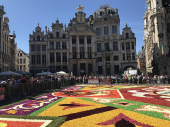 Brussels tops global rankings for international meetings as tourism soars to new heights
Brussels has once again secured its position as the world’s top city for international meetings, according to the latest annual report from the Union of International Associations (UIA).26 June 2025Read More...
Brussels tops global rankings for international meetings as tourism soars to new heights
Brussels has once again secured its position as the world’s top city for international meetings, according to the latest annual report from the Union of International Associations (UIA).26 June 2025Read More... -
 Coffee prices keep climbing in Czech establishments
The cost of a cup of coffee in Czech restaurants and cafés has increased by 4% over the past year, now averaging CZK 57.80, according to data from the Dotykačka point-of-sale system.15 June 2025Read More...
Coffee prices keep climbing in Czech establishments
The cost of a cup of coffee in Czech restaurants and cafés has increased by 4% over the past year, now averaging CZK 57.80, according to data from the Dotykačka point-of-sale system.15 June 2025Read More...
News
-
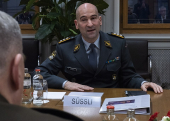 Swiss army has “gone back to sleep,” says departing chief
Switzerland briefly awakened to the urgency of national defence following Russia’s 2022 invasion of Ukraine — but has since drifted back into complacency, outgoingRead More...
Swiss army has “gone back to sleep,” says departing chief
Switzerland briefly awakened to the urgency of national defence following Russia’s 2022 invasion of Ukraine — but has since drifted back into complacency, outgoingRead More... -
 Poland and Germany to seal new defence pact in 2026, leaders announce
Polish Prime Minister Donald Tusk and German Chancellor Friedrich Merz said on Monday that their governments plan to sign a new bilateral defence agreement nextRead More...
Poland and Germany to seal new defence pact in 2026, leaders announce
Polish Prime Minister Donald Tusk and German Chancellor Friedrich Merz said on Monday that their governments plan to sign a new bilateral defence agreement nextRead More... -
 Monegasque Language Committee resumes its work
Following the publication of Sovereign Ordinance No. 11,219 on 7 May 2025, which appointed the members of the Monegasque Language Committee, the group has officially reconvened atRead More...
Monegasque Language Committee resumes its work
Following the publication of Sovereign Ordinance No. 11,219 on 7 May 2025, which appointed the members of the Monegasque Language Committee, the group has officially reconvened atRead More... -
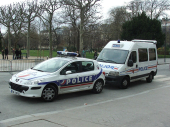 France arrests four, including two Russian nationals, on espionage suspicions
French authorities have arrested four people — including two Russian nationals — as part of an investigation into suspected espionage conducted on behalf of a foreign state, the ParisRead More...
France arrests four, including two Russian nationals, on espionage suspicions
French authorities have arrested four people — including two Russian nationals — as part of an investigation into suspected espionage conducted on behalf of a foreign state, the ParisRead More... -
 German home prices expected to climb over 3% annually, pressuring affordability for new buyers
German residential property prices are poised to grow by more than 3% a year in the coming years, according to a Reuters poll of property analysts, raising fresh concerns about housingRead More...
German home prices expected to climb over 3% annually, pressuring affordability for new buyers
German residential property prices are poised to grow by more than 3% a year in the coming years, according to a Reuters poll of property analysts, raising fresh concerns about housingRead More... -
 UN convention to review environmental complaint over France’s 2030 Winter Olympics
A United Nations environmental body has agreed to examine a complaint accusing France of violating international transparency and public-participation rules during preparations for the 2030Read More...
UN convention to review environmental complaint over France’s 2030 Winter Olympics
A United Nations environmental body has agreed to examine a complaint accusing France of violating international transparency and public-participation rules during preparations for the 2030Read More... -
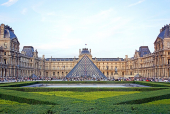 Louvre closes major gallery over structural concerns amid ongoing security scrutiny
The Louvre Museum in Paris has closed one of its key galleries after engineers identified structural weaknesses in parts of the historic building, adding fresh unease to an institution alreadyRead More...
Louvre closes major gallery over structural concerns amid ongoing security scrutiny
The Louvre Museum in Paris has closed one of its key galleries after engineers identified structural weaknesses in parts of the historic building, adding fresh unease to an institution alreadyRead More... -
 EU reaches provisional €192.8 billion budget deal for 2026, boosting research, security and competitiveness
EU lawmakers struck a provisional agreement early Saturday on the bloc’s 2026 budget, securing hundreds of millions in additional funding for research,Read More...
EU reaches provisional €192.8 billion budget deal for 2026, boosting research, security and competitiveness
EU lawmakers struck a provisional agreement early Saturday on the bloc’s 2026 budget, securing hundreds of millions in additional funding for research,Read More... -
 Germany to invest €26.5 billion in soldier equipment and armoured vehicles
Germany is set to channel €26.5 billion into modernising troop gear and expanding its fleet of wheeled armoured vehicles over the next decade, according to a finance ministry document seenRead More...
Germany to invest €26.5 billion in soldier equipment and armoured vehicles
Germany is set to channel €26.5 billion into modernising troop gear and expanding its fleet of wheeled armoured vehicles over the next decade, according to a finance ministry document seenRead More...

Most Read
- Teen held after US woman killed in London stabbings
- Football: Farhad Moshiri adamant Everton deal above board
- Greece hails new post-bailout chapter but concerns remain
- The Kokorev case caused wide discussion in Brussels
- EU accession talks stir debate in Moldova: insights from Gagauzia's leader, Yevgenia Gutsul
News

Italian tenor Andrea Bocelli performed Monday at the launch of a huge cultural center in Kuwait which includes a 2,000-seat opera house, the first in the oil-rich Gulf state.
Emir Sheikh Sabah al-Ahmad Al-Sabah opened the $750-million center and watched a spectacular show that combined international and local music.
Top Kuwaiti singers, artists and performers took part in the event which was also attended by a large number of local and foreign dignitaries.
The sprawling 215,000- square-meter center is located in the heart of the capital Kuwait City and comprises four buildings, a theater center, a music center, a conference center and a library for historical documents.

"You are sitting in the front row of the orchestra with the principal conductor Salonen conducting you," Luke Ritchie, the Philharmonia Orchestra's head of digital, told AFP.
"We wanted you to hear what it's like to sit in the viola section in the front of an orchestra, (for) people to get an insight of the dynamics."
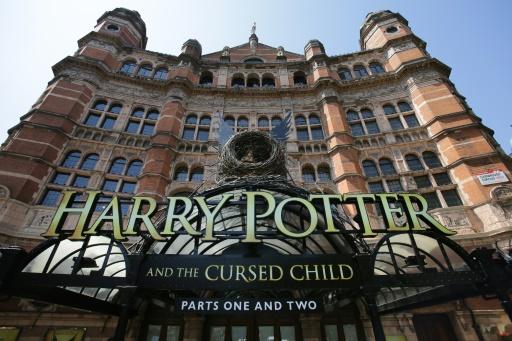
Harry Potter fans were buzzing with excitement Saturday as "Harry Potter and the Cursed Child", a stage play that imagines the fictional boy wizard as a grown-up father of three, opened in London.
After nearly eight weeks of well-received preview performances, London's Palace Theatre hosted the opening gala as the general public were invited to strap themselves in for a new adventure in the saga that has captivated millions around the globe.
Arriving for the opening gala, creator J.K. Rowling told the Press Association she was "so happy" that fans had heeded her pleas to keep the plot a secret, and said she hoped the play would one day appear on Broadway.
Set 19 years after the events of Rowling's seventh and final book, "Harry Potter and the Deathly Hallows", the play sees a grown-up Potter working at the Ministry of Magic.
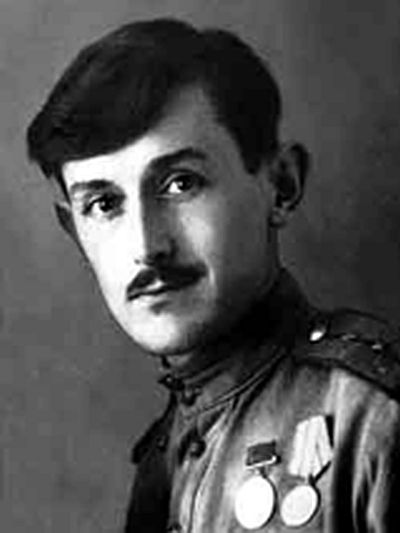
Recently a number of publications appeared in the Russian and Ukrainian press about Victor Nekrasov, devoted to the 105th anniversary of his birth on 17 June, 2016. He was remembered mostly as a Soviet writer and dissident, the author of one of the first truthful novels about World War II V okopakh Stalingrada, (In the Trenches of Stalingrad, 1946). I would like to focus my article on the role of Nekrasov in the heightening of public awareness about the Babi Yar massacre and the need to commemorate and memorialize the Holocaust in Kiev.
Victor Nekrasov was born in Kiev into a noble family in 1911. Nekrasov was a descendent of Russian, Italian and Swiss nobility. His grandmother Alina von Ern graduated from the Smolny Institute for Noble Girls and danced at the graduation ball with Tsar Alexander II. Nekrasov was quite proud of his noble ancestors and described them in his book Malen’kie portrety (Little Portraits).[1]
Victor Nekrasov’s mother Zinaida Nikolaevna Nekrasova (nee Motovilova, 1879-1970) was a distant relative of the poet Anna Akhmatova. Zinaida Nikolaevna was a very progressive woman for her time. While most noble women enjoyed a life of luxury and leisure, Zinaida decided to become a medical doctor. She studied medicine in Switzerland and worked for many years as a physician.[2] Victor remained close to his mother all of her life and Kievans often saw them walking together downtown. Less is known about Victor Nekrasov’s father, Platon Feodosievich, who died from a heart attack in 1917, when Victor was six years old. Victor’s mother and father separated when he was a small child. Zinaida Nikolaevna, with her two sons, Victor and his older brother Nikolai, lived in Switzerland and Paris before World War I and then in Kiev. Nekrasov’s father settled in Krasnoyarsk, where he worked as a bank clerk.[3] So perhaps Victor even did not remember his father.
In the 1930’s Nekrasov simultaneously studied architecture at the Kiev Civil Engineering Institute (now The Kyiv National University of Construction and Architecture (KNUCA)) and theater art in the Theater Studio at the Kiev Russian Drama Theater. In 1936-38 he worked as the architect and then as actor, director, and stage artist in theaters in Vladivostok, Kirov, and Rostov-on-Don.
In August 1941 Victor voluntarily signed up for the Soviet Army. As an actor, he had been excused from service, but he asked the authorities to send him to the front. His request was granted and he served as an engineer and deputy commander of a sapper battalion until June 1944, when he was seriously wounded in his right arm, and with a disability was released from the army. Nekrasov described his military experience in his autobiographical book V okopakh Stalingrada, (In the Trenches of Stalingrad, 1946). It was one of the first honest war novels in Soviet literature, which described the war and the battle of Stalingrad without romanticism, as difficult and dangerous work, where unnecessary risks taken by commanders could cost many soldiers’ lives. The novel was published in the journal Znamia and nominated for a Stalin prize. However, the chairman of the Union of the Soviet Writers Aleksandr Fadeev did not like the novel and crossed it off the list of nominees. (Fadeev was a romantic and Nekrasov’s realistic approach to describing the war contradicted his romantic view). But somebody restored the novel to the list. The only one person could challenge the power of Fadeed over the Union of the Soviet Writers was Joseph Stalin. Vsevolod Vishnevsky, who was the editor of the journal Znamia, told this to Nekrasov when his book received the Stalin prize for literature in 1947.[4]
The novel was republished in the Soviet Union many times in millions of copies and translated into 36 languages. The novel was made into the film Soldaty (Soldiers, 1956); Nekrasov was the author of the screenplay. The film received an award at the Soviet movie festival.
Nekrasov at this point had reached the zenith of his writing career in the Soviet Union. He became the Deputy Chairman of the Union of Ukrainian Writers and lived in the elite Passage house on 25 Kreshchatik Street (near Maidan, Independence Square). On the first floor of the Passage building were expensive stores and restaurants, on the other floors the Kievan elite lived: composers, architects, artists and actors. However, Victor Nekrasov’s honesty, noble manners and his political naivety did not fit “the Soviet way of life.” Like a Kievan Don Quixote, he began his courageous but futile fight for historical justice. Of course he was defeated, expelled from the country and deprived of his Soviet citizenship. His struggle was doomed from the start, but Nekrasov did not understand this for a while, and he hoped to improve the society where he lived.
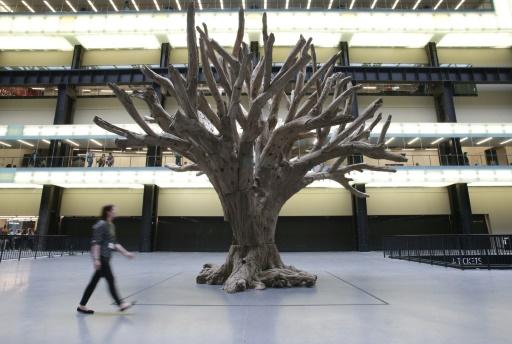
London's Tate Modern museum will this week unveil a vast pyramidal extension providing extra gallery space for the millions of guests who pour through its doors each year.
The modern art museum has been a roaring success since it opened in 2000, with more than five million people now annually visiting the former power station, whose silhouette looms over the south bank of the River Thames.
This is more than twice the number of visitors originally planned, leaving gallery-goers jostling to see the latest exhibitions and requiring more floor space.
Swiss architects Herzog & de Meuron, responsible for the building's original conversion, were chosen for the new "Switch House" project, which cost £260 million pounds ($367 million, 328 million euros).
The result is a fractured pyramid of cladded bricks in keeping with the building's industrial heritage.
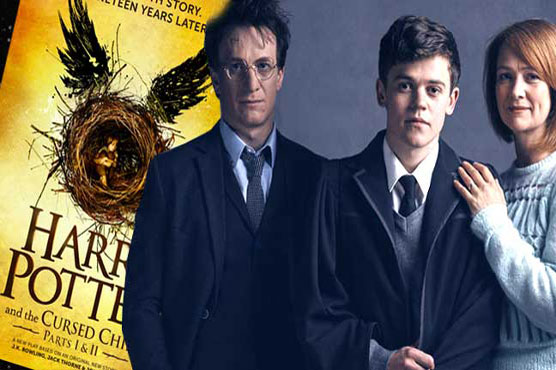
Harry Potter makes his stage debut on Tuesday in a new London play that imagines the fictional boy wizard as a father of three, in the latest offshoot of the globally successful franchise.
"Harry Potter and the Cursed Child" is set 19 years after the seventh and final book in the series by J.K. Rowling, which have sold more than 450 million copies since 1997 and been adapted into eight films.
Like many of his fans, Potter has now grown up and has three children with his wife Ginny Weasley, the sister of his friend Ron, and is working at the Ministry of Magic.
He still has his trademark round-rimmed glasses and the scar on his head, a permanent reminder of his nemesis Lord Voldemort, but must now help his youngest son Albus confront the family’s dark past.
Cut-price previews for the play at the Palace Theatre, in London’s West End, begin on Tuesday ahead of the world premiere on July 30.
Rowling pleaded with spectators at the previews not to disclose the details of the play.

Hollywood star and UN refugee agency envoy Angelina Jolie is to become a visiting professor at Britain’s prestigious London School of Economics, the university announced Monday.
Jolie was named as one of four new “visiting professors in practice” who will contribute to a new master’s programme on “women, peace and security”.
“I am very encouraged by the creation of this master’s programme,” Jolie said in a statement.
“I hope other academic institutions will follow this example, as it is vital that we broaden the discussion on how to advance women’s rights and end impunity for crimes that disproportionately affect women, such as sexual violence in conflict.”
Also appointed was British former foreign minister William Hague, with whom Jolie co-founded the Preventing Sexual Violence in Conflict Initiative in 2010.
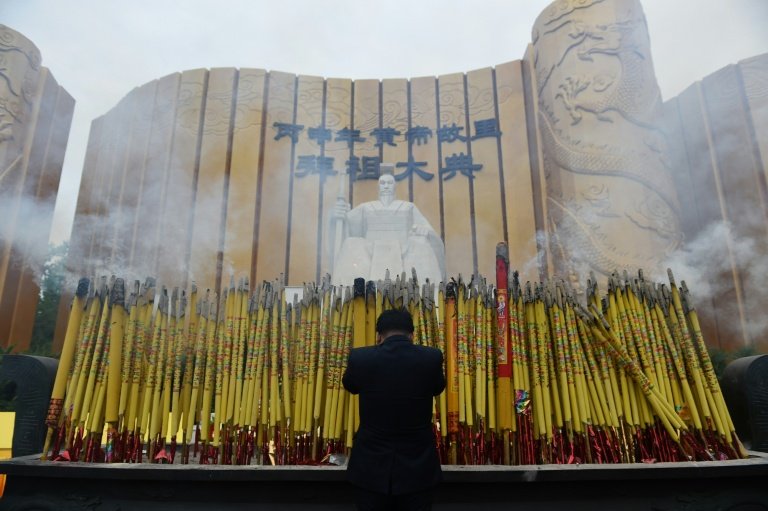
Scarves emblazoned with red dragons draped over their black business suits, Chinese officials lit incense and bowed solemnly at the feet of a mythical ancestor known as the Yellow Emperor.
The avowedly atheist Communist Party is promoting worship of the ancient figure as it seeks to bolster its legitimacy -- and emphasise Chinese blood ties, including with Taiwan ahead of the inauguration of Beijing-sceptic president Tsai Ing-wen.
Thousands gathered in the heartland province of Henan, where the Yellow Emperor –- described in archaic annals and present day schoolbooks as the
founder of Chinese civilisation -- is said to have been born 5,000 years ago.
Shots from gold-painted cannon began the annual ceremony, and the crowd, many in replica antique costume, listened to a booming announcer heralding the "ancestor of the Chinese nation".
High-ranking cadres –- including the province's top official, and a former vice culture minister -– processed up a red carpet, placed offerings in front of an altar and gazed into the statue's chiselled visage, before bowing.
Lydia Zhou, an investment manager who flew from Shanghai to attend, told AFP: "I'm here to worship. He is our ancestor and this is his birthplace."
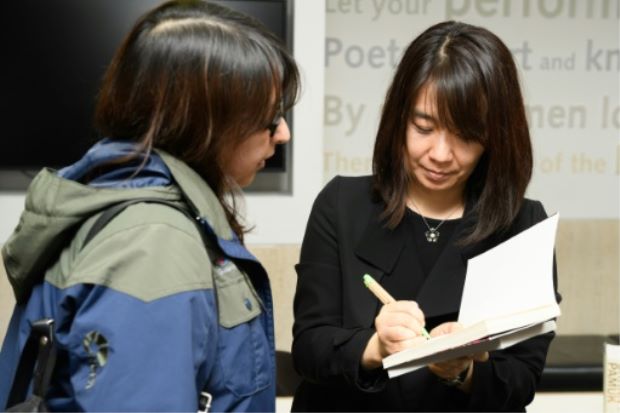
South Korean author Han Kang won the Man Booker International Prize on Monday, sharing the £50,000 ($72,000, 63,500 euros) award with her translator -- who had only taught herself Korean three years before.
Han Kang, 45, an author and creative writing teacher who is already successful in South Korea, is likely to enjoy a spike in international sales following the win for "The Vegetarian".
"I'm so honoured" she told AFP. "The work features a protagonist who wants to become a plant, and to leave the human race to save herself from the dark side human nature.
"Through this extreme narrative I felt I could question... the difficult question of being human."
She was the first South Korean to win the prize.
Described as "lyrical and lacerating" by chairman of the judges Boyd Tonkin, the tale traces the story of an ordinary woman's rejection of convention from three different perspectives.
It was picked unanimously by the panel of five judges, beating six other novels including "The Story of the Lost Child" by Italian sensation Elena Ferrante and "A Strangeness in My Mind" by Turkey's Orhan Pamuk.
"This is a book of tenderness and terror," Boyd told guests at the award ceremony dinner at the Victoria and Albert Museum in London.
Han Kang's first book to appear in English, "The Vegetarian" was described by newspaper The Guardian as a shock to the system.
"Across the three parts, we are pressed up against a society's most inflexible structures -- expectations of behaviour, the workings of institutions -- and we watch them fail one by one," Daniel Hahn wrote in a review.
- 'Climbing a mountain' -
For the first time this year, the award went jointly to the translator, Deborah Smith, 28, who only started learning Korean three years before she embarked on the translation.
"This was the first book that I ever translated, and the best possible thing that can happen to a translator has just happened to me," an emotional Smith told AFP.
"When I was 22 I decided to teach myself Korean… I felt that I was limited by only being able to speak English. I'd always read a lot of translations, and you get the sense of this whole world being out there, very different perspectives, different stories," she said.
"It felt as thought I looked up almost every other word in the dictionary. It felt a bit like climbing a mountain. But at the same time just falling into this world that was so atmospheric and disturbing and moving -- it was a wonderful experience."

US actor Robert De Niro is involved in a project to build a new luxury hotel in the heart of London, he has revealed.
The 83-room Wellington Hotel project, if approved, would be built in Covent Garden and is expected to feature a spa and two restaurants.
"London is one of the most exciting and cosmopolitan cities in the world," the 72-year-old star said in a statement released Saturday.
"It makes perfect sense to develop a hotel that represents all of that in the heart of this city in Covent Garden."